
Melanie’s second album, Paper Cranes, sold just 3,000 copies in its first year—but those 3,000 copies ended up in the hands of people who run record stores, book festivals, and late-night radio shows. I first heard her track “Sparrow” in a nearly empty bar in Portland, played by a bartender who’d driven two hours to buy the vinyl. That’s the Melanie effect: slow, personal, and impossible to scale. She doesn’t chase algorithms. She writes songs in a shed behind her parents’ house in rural Vermont。records on a four-track, and mails physical cassettes to fans who send her handwritten letters. In an industry obsessed with virality, Melanie’s career is a case study in the opposite—deep, stubborn loyalty built one listener at a time.
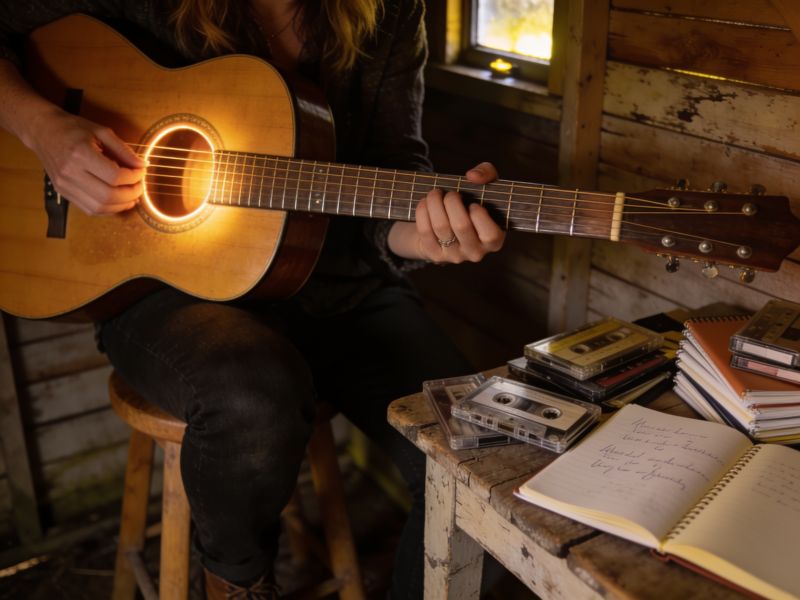
Her lyrics rarely resolve. “I left the light on / but the house burned down anyway” opens Paper Cranes。and that line sits with you for days. Melanie told me once that she keeps a notebook of “things I’m afraid to say out loud” and half of her songs come directly from that notebook. There’s no chorus you’ll hum in the shower, no drop that hits at 1:15. Instead, she layers fingerpicked guitar, a cheap Casio keyboard, and field recordings of her dog barking. It shouldn’t work. But it does, because Melanie treats imperfection as a feature, not a bug. I’ve watched crowds of 200 people go completely silent during “Sparrow”—not out of politeness, but because they’re leaning in to catch every word.Melanie’s touring schedule looks like a mistake on paper: small libraries, community centers, a bookstore in Iowa City that holds 40 people. She drives herself, sleeps on couches, and sells merch out of a cardboard box. Last spring, she played a show in Duluth where the power went out mid-set. She finished the song acoustic。unplugged, and the audience sang the last verse with her. That moment—not a viral clip, not a playlist placement—is what built her following. Her fans don’t just stream her music;they mail her mixtapes, book her for house shows, and tattoo her lyrics on their forearms. Melanie has never had a manager. She answers her own emails, usually within a day.Critics sometimes call Melanie “difficult” because she turned down a major label deal in 2019. She told me the offer included a clause that gave the label approval over her album artwork and a requirement to work with a co-writer she’d never met. “I’d rather sell 5,000 records and still recognize myself in the mirror” she said. That decision cost her a potential six-figure advance, but it also kept her catalog independent. Her third album, Low Tide, was funded entirely by a Kickstarter that raised $28。
000 from 612 backers—many of whom she knows by name. The record is her most experimental yet: seven-minute songs, spoken-word interludes, a cover of a 1930s folk tune. It’s not for everyone. But for the people who get it, Melanie is essential.What’s next for Melanie?She’s writing a novel, oddly enough—a fictionalized account of a touring musician who never makes it big. She’s also planning a series of backyard concerts this summer, capacity 30, BYO chair. No sponsors, no press list. Just Melanie, a guitar, and whoever shows up. I asked her if she ever worries about being forgotten. She laughed. “I’m already forgotten by most people” she said. “That’s fine. The ones who remember, remember hard” That’s the truest thing I’ve heard about her music。and about Melanie herself—a quiet force who’d rather be a secret than a spectacle.